
Online Business Ideas in 2026: Stop Buying the Dream
Online Business Ideas in 2026: Stop Buying the Dream and Evaluate the Business Model
If you've spent any amount of time researching online business ideas, you've probably noticed that the "best opportunity" seems to change every few years.
One year everybody is talking about Amazon FBA. Then it's dropshipping. Then affiliate marketing. Then digital agencies. Then online coaching. Then high-ticket closing. Then automation businesses, AI services, faceless content, digital products, trading systems, or whatever else happens to be getting the most attention.
Some people absolutely build successful businesses using these models. I'm not writing this article to tell you that e-commerce, affiliate marketing, agencies, consulting, software, or online education don't work. Many of them do.
The problem begins when we stop evaluating the business and start buying the dream.
The screenshots look good. The lifestyle looks good. The laptop by the pool looks good. The person selling the opportunity tells you how much money is possible, how little experience you need, and how their system can supposedly shorten the learning curve.
Then you spend the money, get access to the course, and discover something nobody emphasized enough in the advertisement:
You still need customers.
That's where I think a lot of aspiring entrepreneurs get trapped. They keep changing business models when the real problem is that they never learned how to consistently acquire customers, or they chose businesses that don't match the skills they already have.
If you're already a salesperson, that mistake can be even more expensive because you may be abandoning one of your strongest assets in search of a supposedly easier way to make money.
Maybe you don't need another opportunity.
Maybe you need to stop asking, "What's the easiest business to start?" and start asking, "What business makes the most sense for the person I already am?"
The Problem May Not Be That You Haven't Found the Right Online Business Yet
I regularly see people who have tried three, four, five, or more different ways to make money online. They aren't necessarily lazy. In many cases, they're extremely motivated. They've purchased courses, watched hundreds of hours of videos, built websites, created funnels, signed up for software, joined communities, and spent years searching for the thing that will finally work.
The problem is that every time the results don't come quickly enough, they assume they picked the wrong opportunity. Instead of developing competence in one business, they move to the next one and start over again.
That creates a brutal cycle.
You spend money learning the first business. You struggle through the beginner stage. You discover that customer acquisition is harder than the marketing suggested. Before you become good enough to break through, another opportunity appears to look easier. You abandon what you've learned, buy into the next model, and return to beginner status all over again.
After several years, you haven't actually accumulated expertise. You've accumulated introductions.
You know a little about dropshipping. A little about paid ads. A little about affiliate marketing. A little about AI. A little about funnels. A little about content.
But you never stayed anywhere long enough to build the skill, customer base, network, systems, or recurring revenue that could make the business valuable.
That's why I believe one of the most important questions an entrepreneur can ask is:
Am I changing businesses because this model is genuinely wrong for me, or because I've reached the point where the real work begins?
There Is No Business Model That Removes Customer Acquisition
This is one of the most important things I can teach anyone researching online business ideas.
Somebody has to buy something.
It sounds obvious, but a lot of business-opportunity marketing almost makes the customer disappear from the presentation. The focus becomes automation, systems, websites, software, AI, passive income, outsourcing, and lifestyle.
Meanwhile, the most important question in the entire business receives surprisingly little attention:
Where do the customers come from?
A beautiful Shopify store isn't a customer. A sales funnel isn't a customer. A CRM isn't a customer. An AI automation isn't a customer. A course certification isn't a customer. An LLC isn't a customer. A logo isn't a customer.
Those can all support a business, but somebody still has to create demand, attract attention, start conversations, earn trust, and close transactions.
This is why experienced salespeople have such an important advantage when evaluating entrepreneurship.
You already understand that reality.
You've lived it.
You know revenue doesn't magically appear because the infrastructure exists.
Why Experienced Salespeople Should Evaluate Online Business Ideas Differently
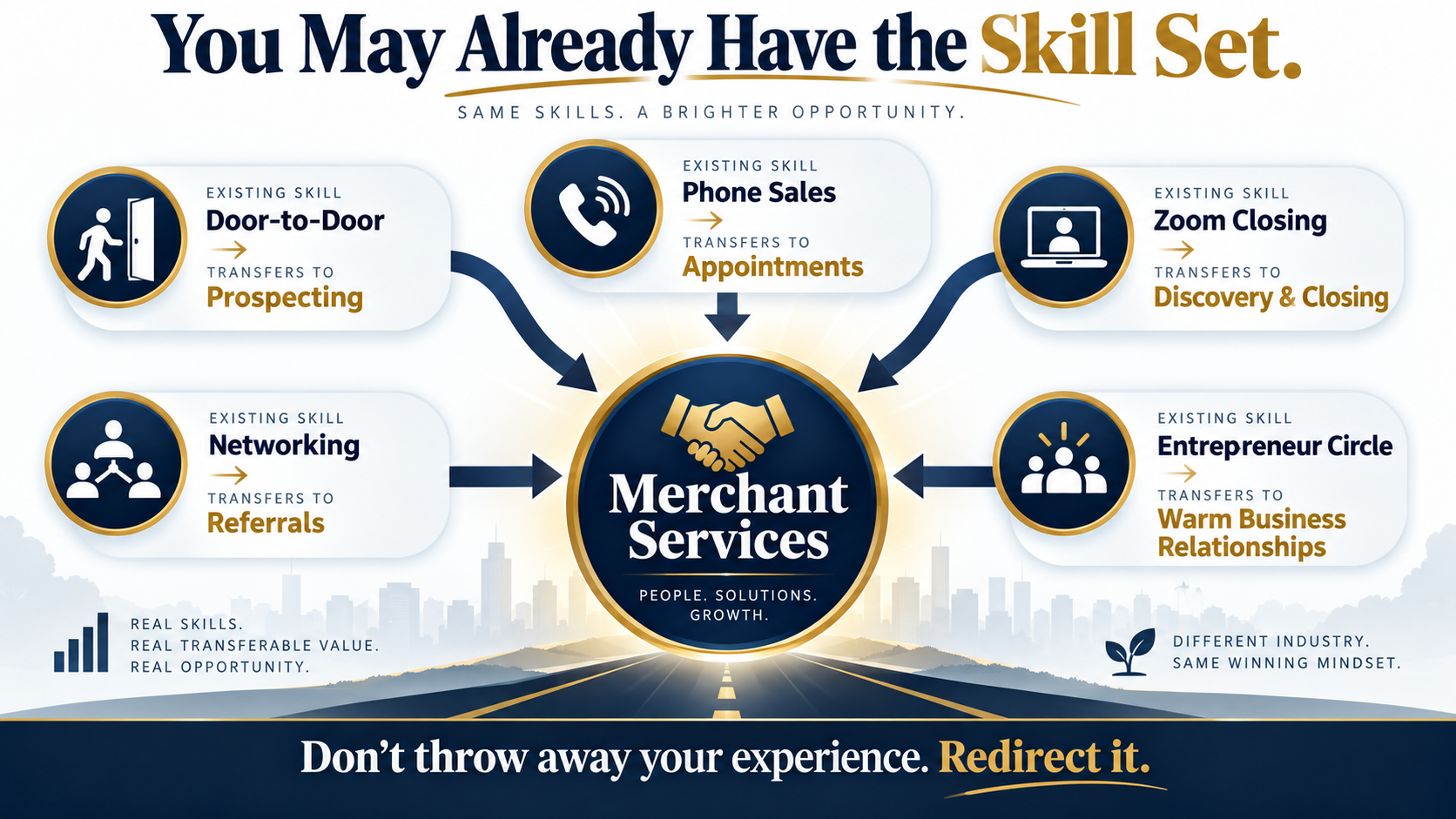
If you've spent years in sales, you may already possess one of the hardest business skills to develop: customer acquisition.
Perhaps you've spent years knocking doors. You know how to approach somebody who didn't ask to speak with you and turn that interruption into a conversation.
Perhaps you've spent years on the phone. You've learned how to work a list, get past the opening seconds of a cold call, set appointments, follow up, and continue dialing after being rejected.
Maybe you're a high-ticket closer who runs Zoom calls. You understand discovery, pain points, decision-making, objection handling, value presentation, and asking for the business.
Maybe you're a networker. You know how to build relationships, generate introductions, and connect people.
Or perhaps you've spent years working around entrepreneurs. Your phone is already full of restaurant owners, contractors, consultants, doctors, retailers, real-estate professionals, gym owners, salon owners, and other businesspeople.
Those aren't small advantages.
They should influence which business you choose.
Instead of abandoning those skills because somebody told you the newest online business requires "no selling," I would seriously consider whether your better opportunity is finding a business where selling becomes your competitive advantage.
That's the idea behind my guide to Low-Cost Business Ideas for Salespeople Who Already Know How to Sell.
You May Not Need a New Skill Set. You May Need a Better Vehicle.
This idea runs through almost everything I'm teaching in this new article series.
If you've spent ten years becoming excellent at sales, why would your first entrepreneurial move be choosing a business where that experience doesn't matter?
That's like spending a decade becoming a great mechanic and then deciding your best opportunity is opening a bakery because somebody on YouTube said bakeries are easy.
Maybe you'll become a great baker.
But you intentionally walked away from your competitive advantage.
Salespeople do this all the time.
They get tired of their current compensation structure and assume they're tired of sales itself.
Maybe you aren't tired of selling.
Maybe you're tired of selling something where the economic benefit ends after the commission.
That's why I wrote Sales Jobs With Residual Income: Stop Starting at Zero Every Month.
The issue may not be the work.
The issue may be what the work is building.
How I Would Evaluate Any Online Business Opportunity
Before you buy a course, build a website, sign up for expensive software, or quit your job, you should be able to answer some basic questions.
These questions apply whether you're evaluating e-commerce, an agency, affiliate marketing, consulting, merchant services, software, coaching, content creation, or almost any other business.
1. Who Is the Actual Customer?
This should be immediately obvious.
Who gives the business money?
A consumer?
A local business?
A corporation?
A subscriber?
An advertiser?
Another entrepreneur?
If you can't clearly identify the customer, you don't understand the business yet.
2. What Are They Actually Buying?
Not the opportunity.
Not the dream.
Not your business membership.
What does the end customer purchase?
A physical product?
Software?
Consulting?
A service?
Financial infrastructure?
Payment processing?
Leads?
Education?
Entertainment?
The more clearly you can explain the transaction, the more clearly you can evaluate the opportunity.
3. What Problem Does the Product Solve?
Good businesses generally solve something people care enough about to pay for.
The bigger and more expensive the problem, the stronger the potential demand can be.
This is one reason I like B2B services. Businesses routinely pay for solutions that help them generate revenue, collect money, reduce costs, save time, manage employees, acquire customers, or operate more efficiently.
4. How Will I Acquire Customers?
This is where many online-business dreams fall apart.
Will you cold call?
Run ads?
Create content?
Rank on Google?
Build partnerships?
Network?
Send outbound email?
Sell through marketplaces?
Get referrals?
Use an existing audience?
There has to be an answer.
"People will find my website" is not a customer-acquisition strategy.
5. What Does It Cost Me to Acquire a Customer?
If you have to spend $1,000 in advertising to acquire a customer worth $600, you don't have a scalable customer-acquisition model.
If you already know how to prospect and sell directly, you may be able to acquire customers with more labor and less advertising expense.
That tradeoff matters.
6. What Does Fulfillment Require?
Selling the customer is only half the business.
What happens after the sale?
Do you manufacture something?
Ship something?
Manage ad campaigns?
Hire contractors?
Provide consulting?
Write software?
Handle support?
Manage returns?
This is one area where a seemingly simple online business can become surprisingly complicated.
7. Does Revenue Repeat?
Not every business needs recurring revenue.
But you should understand whether it exists.
Does the customer buy once?
Subscribe monthly?
Renew annually?
Purchase repeatedly?
Create transaction-based recurring revenue?
If your goal is to stop constantly restarting your income, this question should matter a lot.
8. What Happens if I Stop Selling for 30 Days?
This is a great test.
Does revenue immediately approach zero?
Do existing customers continue paying?
Do subscriptions continue?
Do renewals happen?
Does a merchant portfolio continue generating eligible residual economics?
Again, recurring revenue doesn't automatically mean the business is better.
But you should understand the answer.
9. What Am I Building After Five Years?
A website?
A customer database?
A subscriber base?
A brand?
A book of business?
Residual income?
Intellectual property?
A team?
Systems?
Nothing?
If five years of hard work ends with nothing except five years of previous commissions, you should know that before you start.
10. Does This Business Match What I'm Already Good At?
This may be the most overlooked question.
Your experience matters.
If you're great at outbound sales, look for models where outbound sales creates an advantage.
If you're technical, technology-heavy businesses may fit.
If you're great on camera, content may make sense.
If you have deep expertise in an industry, consulting may make sense.
If you're connected to entrepreneurs, B2B services may make sense.
Don't choose a business only because somebody else became successful doing it.
Choose one where your strengths improve your odds of becoming good at it.
The FTC Is Warning Consumers About the Same Basic Problem
This isn't just my opinion.
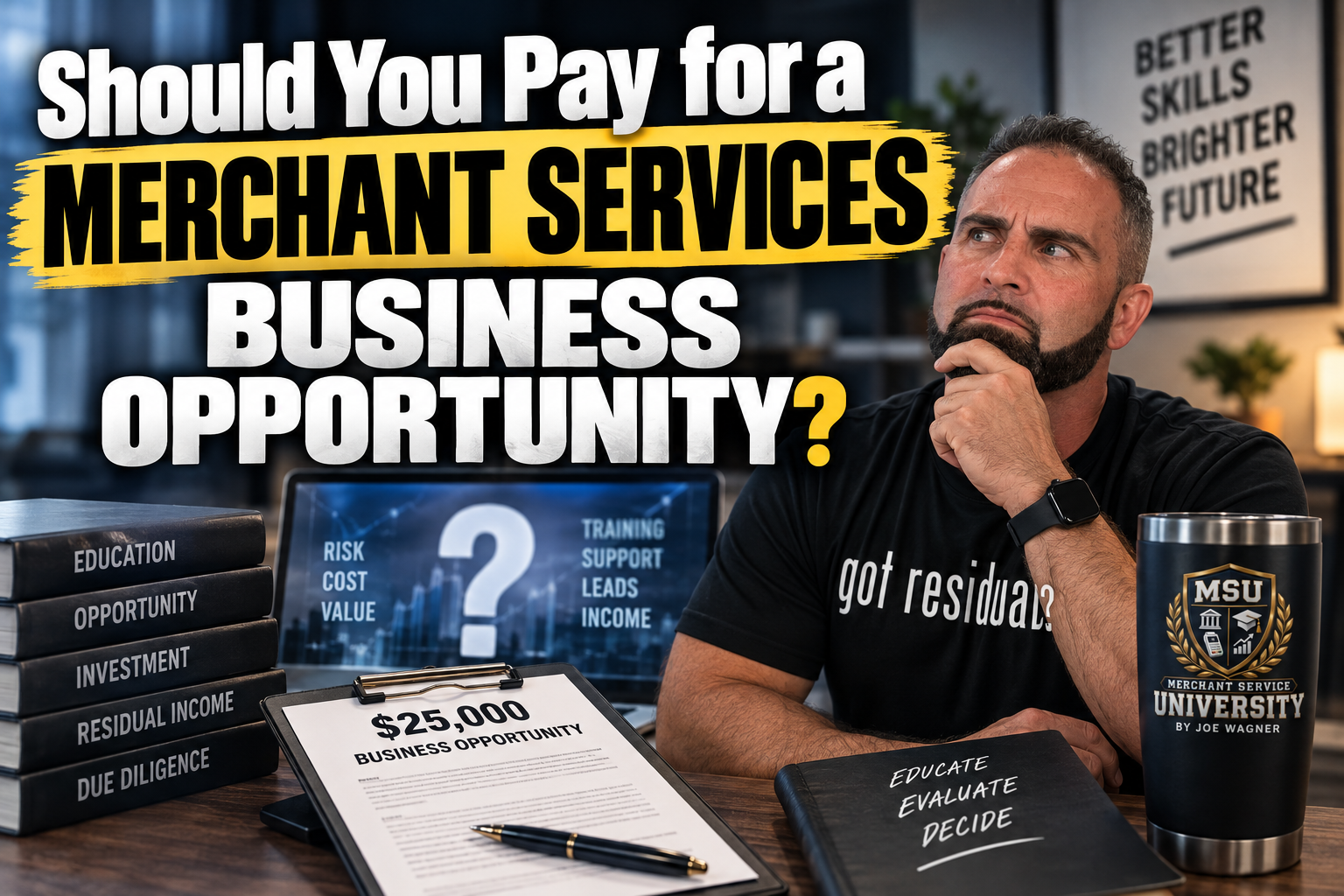
In April 2026, the Federal Trade Commission again warned consumers about business coaching offers that promise quick money, guaranteed earnings, large returns with little work, or supposedly proven systems. The FTC recommends researching the company, questioning success stories and testimonials, avoiding pressure tactics, and being skeptical of anybody guaranteeing that a business opportunity will produce substantial income.
The FTC has continued taking action against money-making opportunities built around allegedly false or unsupported earnings claims. In 2026, the agency also highlighted cases involving training and business-opportunity promotions that relied on lifestyle or earnings representations consumers could not realistically expect simply because they bought the program.
That doesn't mean paid coaching is bad.
I've paid for education myself throughout my life and believe specialized coaching can absolutely shorten a learning curve when the teacher has real expertise and the student understands what they're buying.
The question is whether you're buying education or buying hope.
Good education should help you become more competent at a legitimate business.
It should not require you to suspend basic business judgment.
What I Mean When I Say "Stop Buying the Dream"
I'm not telling you to stop investing in yourself.
I'm telling you to separate skill development from business-opportunity marketing.
Suppose you hire an experienced sales coach because you want to improve discovery calls, negotiation, leadership, or prospecting.
That's straightforward.
You're paying to improve a skill.
Now compare that with somebody telling you:
Pay me $15,000 and I'll give you the exact online business that will allow you to leave your job, work a few hours a week, and become financially free.
Those are very different purchases.
One sells expertise.
The other may be selling a future lifestyle.
Before buying the second one, I would want to understand every part of the underlying economics.
The "Done for You" Business Deserves Extra Scrutiny
One of the most seductive phrases in online entrepreneurship is:
Done for you.
Done-for-you store.
Done-for-you ads.
Done-for-you leads.
Done-for-you fulfillment.
Done-for-you sales.
Done-for-you automation.
Done-for-you passive-income system.
The more "done for you" the business becomes, the more I want to know what exactly the business owner contributes.
The FTC has specifically warned consumers to be cautious of opportunity sellers who imply that buyers don't need to understand the business because experts, coaches, or a turnkey system will supposedly handle everything for them.
That doesn't mean outsourcing is bad.
Great companies outsource things all the time.
The difference is that a real business owner understands the machine they're outsourcing.
You should know how customers arrive.
Why they buy.
What your margins are.
Who fulfills.
Where the risk sits.
What happens when advertising costs change.
What happens when a platform changes its rules.
And what happens if the person supposedly doing everything for you disappears.
E-Commerce Can Work. Understand What You're Signing Up For.
E-commerce is a real business model.
People build extraordinary companies selling physical products online.
But look at what the business may require.
Product selection.
Sourcing.
Manufacturing or suppliers.
Inventory or dropshipping relationships.
A storefront.
Advertising.
Creative.
Conversion optimization.
Customer service.
Returns.
Shipping.
Platform fees.
Margins.
Cash flow.
None of that means e-commerce is bad.
It means e-commerce is not simply:
"Put products online and collect passive income."
If you love products, branding, advertising, and consumer marketing, it may be an excellent fit.
If your strongest asset is direct sales and your least favorite activity is managing products, it may not be.
That's how I want you evaluating these models.
Affiliate Marketing Can Work. But Where Does the Traffic Come From?
Affiliate marketing sounds beautifully simple.
Recommend someone else's product.
Earn money when people purchase.
No inventory.
No fulfillment.
Potentially low startup expenses.
All true.
But the business still needs distribution.
Where does your audience come from?
SEO?
YouTube?
Social media?
Email?
Paid advertising?
A community?
A website?
If you have no traffic, you have no affiliate business.
For somebody who loves content creation and audience building, that can become a great model.
But if you're an experienced direct salesperson who hates creating daily content, you need to recognize that the skills required may be very different from the ones you've already developed.
Agencies Can Work. But Sales Is Only Half the Problem.
An agency can be a fantastic low-overhead business.
You find a niche.
Create an offer.
Acquire clients.
Deliver a service.
The salesperson has an obvious advantage because acquiring agency clients is often one of the hardest parts.
But you also need fulfillment.
If you sell ten marketing clients and then discover you don't know how to produce marketing results, you don't have an agency problem.
You have a delivery problem.
This is why I don't like telling people:
"Just start an agency."
What agency?
What service?
Why are you qualified?
What measurable result are you helping produce?
Who fulfills the work?
How do clients stay?
Those questions matter much more than the word agency.
Consulting Can Be Excellent if You Actually Have Something Valuable to Teach
Consulting is another model I like for experienced professionals.
Your expertise becomes the product.
If you've spent fifteen years solving a specific business problem, companies may pay you to help them solve it faster.
Startup costs can be relatively low because you're selling knowledge rather than inventory.
The downside is that consulting can become very time dependent.
If every dollar requires another hour from you, you've created a lucrative form of self-employment rather than recurring income.
That might be exactly what you want.
Just know what you're building.
Digital Products and Courses Can Be Legitimate Businesses Too
I want to be clear here because this article would be easy to misunderstand.
There are excellent courses.
There are excellent educators.
There are excellent coaches.
There are people with decades of experience who have organized that experience into useful education and deserve to be paid for it.
The problem is not courses.
The problem is when the course becomes more profitable than the underlying expertise, and the marketing begins selling people the dream of doing something the teacher may barely be doing themselves.
I think one of the most useful questions a buyer can ask is:
Does this person primarily make money doing the thing they're teaching, or primarily make money teaching other people how they might someday do it?
Neither answer automatically makes the person legitimate or illegitimate.
But I want to know.
That question became important in my own industry.
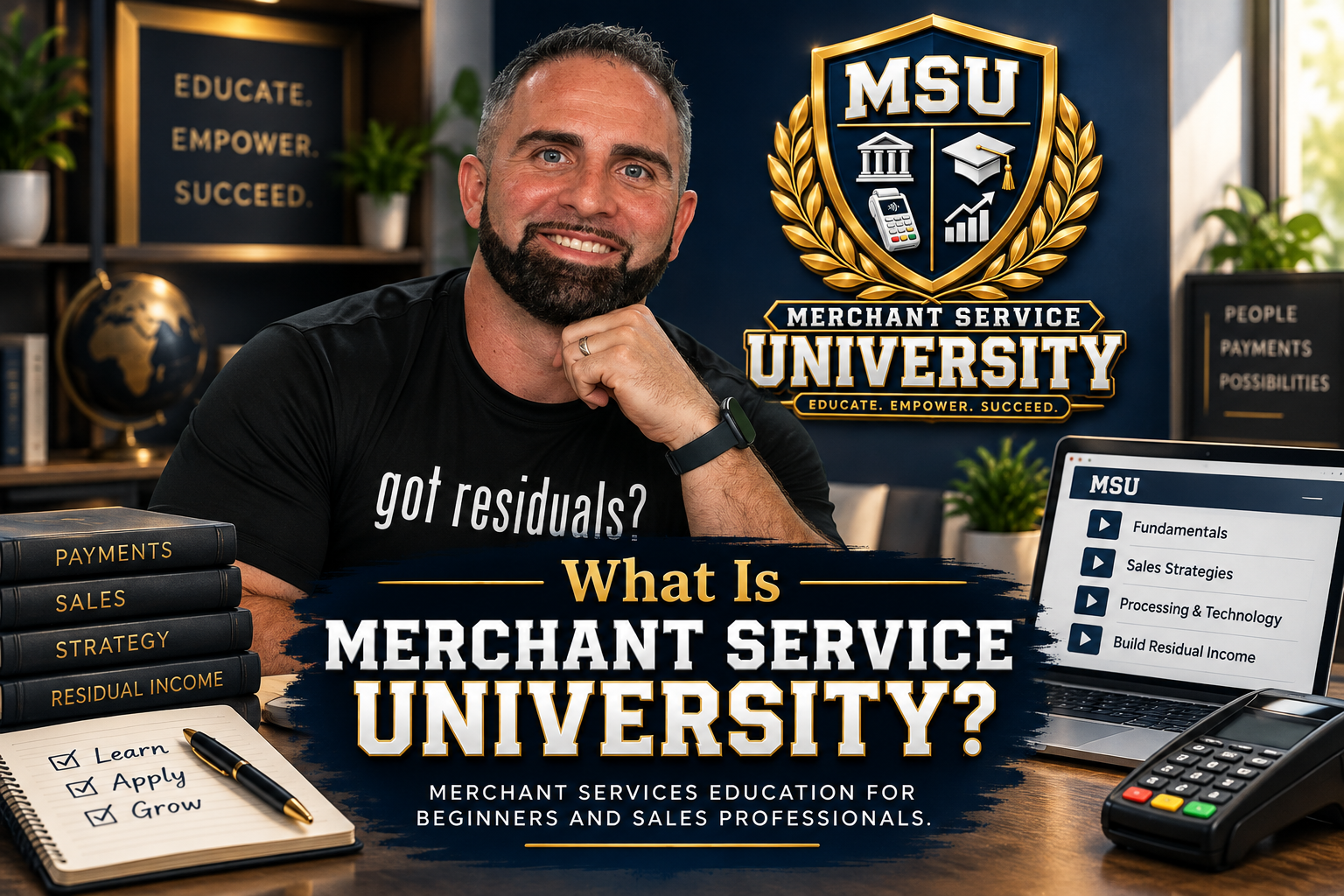
Why I Built Merchant Service University Differently
Merchant Service University came from watching what was happening around merchant-services education.
I became tired of seeing people charged thousands of dollars simply for access to an industry I've actually made my living in for more than 16 years.
I also started hearing from people who had paid for programs but didn't feel they had received the practical depth they expected.
I don't believe every person selling merchant-services training is doing something wrong.
I do believe there is a significant distinction between:
Making your living in merchant services
and
Making your living selling people the dream of merchant services.
I didn't need MSU to become another high-ticket course.
My livelihood was already coming from actually working in the payments industry.
So I invested my own time and money into building the foundational educational process and made the core training free.
You can read the full story in What Is Merchant Service University?.
The philosophy is simple:
Get educated before you get recruited.
Take a Peek at MSU Before You Decide Merchant Services Is for You
This article isn't secretly designed to tell you every other online business is bad and merchant services is perfect.
That's not true.
I want you to use the same evaluation framework on merchant services that I just told you to use everywhere else.
Who is the customer?
Business owners.
What do they buy?
Payment processing and related commerce technology.
Is there real demand?
Businesses need ways to accept and manage payments.
How do customers get acquired?
Prospecting, referrals, networking, phone sales, appointments, relationships, and other business-development methods.
Does revenue potentially repeat?
Yes. Depending on the account economics and agent agreement, active merchants can generate recurring residual compensation.
Does fulfillment require you to build the technology?
Not when you're operating as an agent through an established processing partner.
Can your existing sales skills transfer?
Very possibly.
That's why I want experienced salespeople to take a look.
Go to MerchantServiceUniversity.com.
The core training is free.
You don't need to choose one processing company before you learn.
You don't need to pay me thousands to discover what payment processing means.
Learn first.
Then decide whether merchant services deserves more of your attention.
Why Merchant Services Can Be Interesting to Someone Tired of Online Business Hopping
Merchant services is not a new internet trend.
Businesses have been accepting card payments for decades.
The technology continues to evolve, but the underlying business need is not being invented by somebody selling a course.
That matters to me.
The customer exists independently of the opportunity.
The merchant does not buy payment processing because they want to become a merchant-services agent.
They buy payment services because they operate a business and need a way to accept money.
That is an important test for any opportunity.
Would the customer still buy the product if the business opportunity disappeared tomorrow?
If the answer is yes, you're dealing with genuine end-customer demand.
Merchant Services Isn't "Online," but It Can Be Built Using Modern Sales Tools
I don't think we need to force merchant services into the traditional definition of an online business.
It's better described as a modern B2B sales business that can use online and remote tools heavily.
You can build prospect lists online.
Make outbound calls.
Run Zoom meetings.
Use a CRM.
Send digital agreements.
Communicate remotely.
Complete training online.
Work from a home office.
But you're still serving real businesses.
That hybrid is something I actually like.
You can use technology without your entire business depending on a social-media algorithm or marketplace ranking.
Our upcoming article Can You Sell Merchant Services From Home? Phone, Zoom & Remote Sales Explained goes deeper into exactly how those different sales channels can work together.
Your Existing Business Network May Be More Valuable Than an Audience of Strangers
Online entrepreneurs are often told they need followers.
More followers.
More views.
More subscribers.
Those things can absolutely create distribution.
But experienced businesspeople sometimes overlook another form of distribution:
relationships.
If you've spent ten years in B2B sales, how many entrepreneurs do you already know?
How many professionals serve businesses in your market?
How many former clients run companies?
How many local owners know your name?
How many people would take your phone call because you've built trust?
That's an asset.
A person with a network of 200 legitimate business relationships may be in a stronger position to build certain B2B businesses than someone with 20,000 followers who have no purchasing intent.
The question is whether you choose a business where those relationships matter.
Merchant services is one of those businesses.
Stop Looking for a Business With No Selling
This may be the biggest message I have for experienced salespeople.
Why are you trying to escape selling?
You're good at it.
The internet has somehow convinced people that the perfect business is one where:
You don't sell.
You don't prospect.
You don't speak to customers.
You don't fulfill.
You don't manage anything.
And somehow money arrives anyway.
If you're already successful at sales, that fantasy may actually pull you away from your greatest advantage.
I would rather ask:
What could I sell where the sale builds more for me?
That's why I've been writing about commission-only sales jobs that offer recurring-income potential and merchant-services residual income.
The goal is not to stop working.
It's to improve what the work builds.
One-Time Revenue and Recurring Revenue Create Very Different Businesses
This deserves serious attention if you're researching entrepreneurship because many people only compare the amount of the first sale.
Imagine Business A generates $2,000 every time you acquire a customer. You receive the money, complete the work, and need another customer to create another $2,000.
Business B may produce less cash from the first transaction but can potentially continue generating revenue while the customer remains active.
Which is better?
You don't know yet.
Business A may be dramatically more profitable.
But the recurring model has a characteristic the first model doesn't:
Existing customers can create a base beneath new production.
This is the concept we explore in How to Build Recurring Income as a Salesperson Without Starting Over Every Month.
For somebody tired of rebuilding their income every month or year, recurring economics deserve a place in the decision.
Build Something That Has a Chance to Become More Valuable Because You Worked Yesterday
This is one of my favorite tests for any business.
What did yesterday's work create?
Maybe it created a customer.
Maybe a subscriber.
A merchant.
An email list.
A piece of intellectual property.
A referral relationship.
A software product.
An employee.
A process.
A recurring contract.
A brand.
A residual stream.
Something should be accumulating.
That doesn't mean every part of your business has to be passive.
It means your effort should have the possibility of creating something beyond the immediate transaction.
This is why I'm so focused on the concept of a book of business.
Our upcoming article Sales Careers That Build a Book of Business Instead of Starting Over will expand on exactly that idea.
Low Startup Cost Is Useful, but It Isn't Enough
A lot of people search specifically for online businesses because they want low startup costs.
That's understandable.
The SBA recommends calculating startup costs before launching so entrepreneurs understand both their initial expenses and what will be required to reach break-even.
Lower overhead can be a huge advantage because it gives you more time to prove the business without enormous fixed costs.
But low cost doesn't make a bad model good.
You still need a customer.
Margins.
Demand.
A way to acquire business.
A way to deliver.
That's why we created Businesses You Can Start With Little Money and No Inventory as another article in this cluster.
The purpose isn't to chase "free."
It's to reduce unnecessary financial barriers while directing more effort toward actual selling and execution.
Don't Build the Entire Machine Before You Know Whether You Can Sell
This is another expensive mistake.
People spend six months preparing to become entrepreneurs.
They build the website.
Buy software.
Form the company.
Create a logo.
Build automations.
Take courses.
Set up funnels.
Design business cards.
Build social accounts.
Then finally decide they should probably find a customer.
Reverse that thinking.
Learn enough to deliver responsibly.
Set up the legitimate infrastructure you actually need.
Then begin testing customer acquisition as early as possible.
The market will teach you things no course can.
What people actually care about.
What they ignore.
Which offers make sense.
Which objections repeat.
What customers will actually pay.
That is real business education.
Don't Confuse Information With Progress
This one is personal because we live in an era where you can consume business content all day and feel incredibly productive.
Podcasts.
YouTube.
Books.
Courses.
Communities.
AI.
Newsletters.
There has never been more access to business information.
Yet consuming information can become its own form of procrastination.
You can spend twelve months learning how to prospect without making a prospecting call.
You can study offers without making one.
You can learn how businesses work without ever asking somebody to buy.
Education should shorten the distance between ignorance and execution.
It should not replace execution.
That's another reason the Merchant Service University process ultimately leads toward prospecting, merchant conversations, partner selection, and building a portfolio.
Certification is a starting line.
Not the business itself.
A Better Way to Choose Your Next Business
If you've been hopping from one opportunity to another, I would stop searching for a week.
Don't buy anything.
Instead, write down your answers to these questions.
What am I already unusually good at?
What kind of work do I actually enjoy?
Who do I already know?
Which customers do I understand?
Do I prefer B2B or consumer sales?
Am I good at phone sales?
Can I close on Zoom?
Do I enjoy networking?
Am I willing to cold prospect?
How much money can I responsibly invest?
Do I want high upfront income?
Do I value recurring revenue?
Do I want a book of business?
How much fulfillment do I want to personally manage?
Do I want something I could start part time?
Then use those answers to eliminate businesses.
That may sound less exciting than discovering the next hidden opportunity.
It's also much more likely to lead you toward something you'll actually stick with.
Who I Think Should Take a Serious Look at Merchant Services
Merchant services is not for everybody.
If you hate sales, I wouldn't choose it simply because residual income sounds attractive.
If you need guaranteed income immediately, an independent commission business may not fit your current circumstances.
If you want someone else to supply every customer, it may frustrate you.
But consider it seriously if several of these describe you.
You've already sold successfully.
You're comfortable talking to business owners.
You've done phone sales, outside sales, or remote closing.
You know entrepreneurs.
You enjoy networking.
You're willing to prospect.
You want low overhead compared with many traditional businesses.
You're interested in building recurring income.
You want a business you can potentially start alongside what you're already doing.
And you'd rather build a portfolio than simply chase another one-time commission.
If that's you, I don't think you need a sales pitch from me.
I think you need education.
Don't Choose a Merchant Services Company Yet
If merchant services is catching your attention, resist the temptation to immediately search:
"Best merchant services company to sell for."
You aren't ready for that question yet.
First learn the business.
Understand processing.
Understand pricing.
Understand residuals.
Understand the Schedule A.
Understand agent agreements.
Understand vesting.
Understand merchant technology.
Then compare partner companies.
You can use How to Compare Merchant Services Companies Without Getting Sold when you're ready for that step.
And the complete sequence is laid out in How to Become a Merchant Services Agent in 2026.
Take a Peek at Merchant Service University
If you're reading articles about online business ideas because you're searching for your next move, I don't want you to make another emotional purchase.
Take a look at an industry first.
Merchant Service University teaches the foundational payments business at no cost.
You can learn how transactions work, how merchant-services agents are compensated, how residual income works, how pricing and Schedule A economics affect your income, what to look for in an agreement, how technology fits into modern payments, and how agents actually prospect for merchants.
There is no obligation to join one particular processing company.
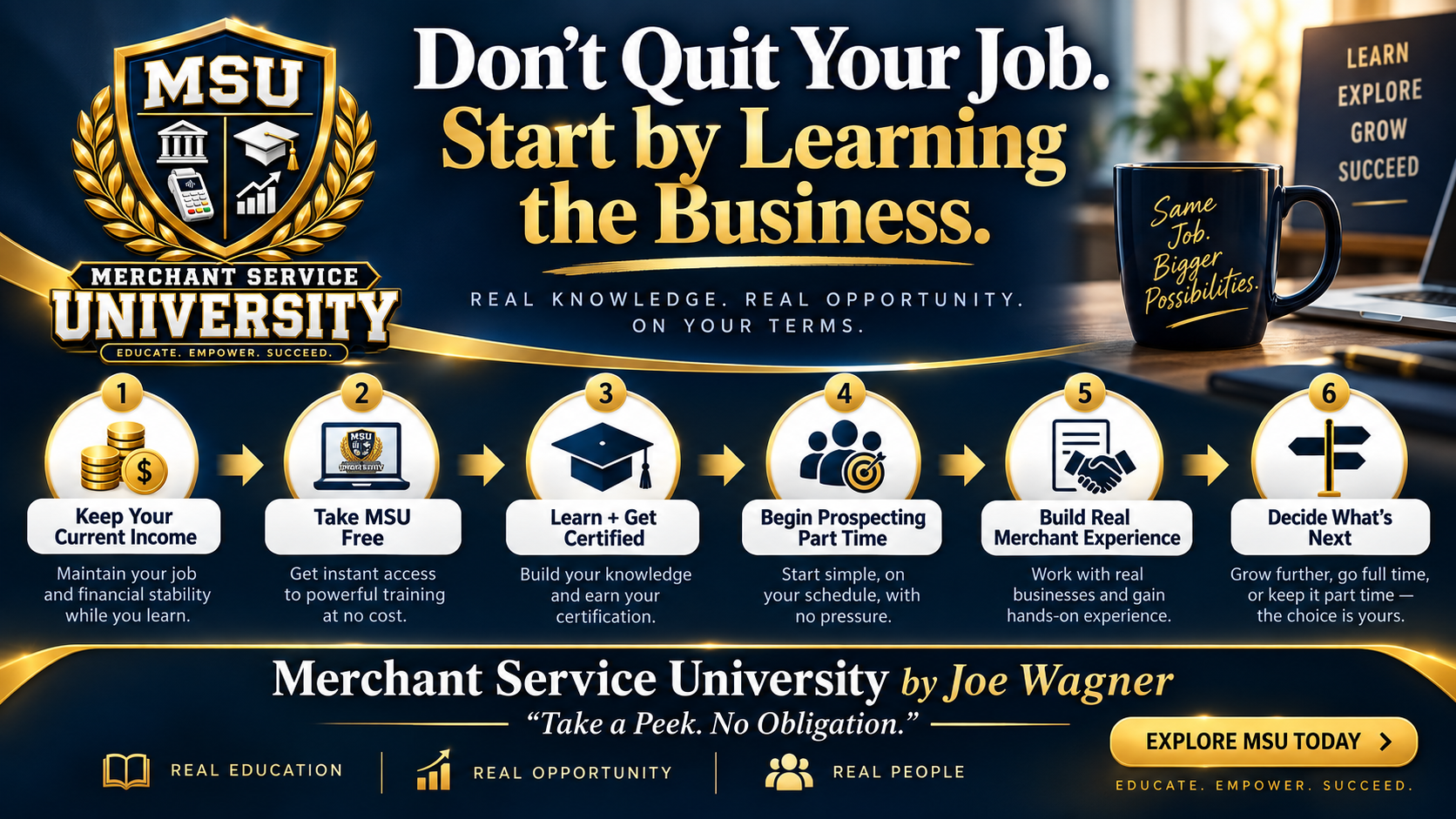
You don't have to quit your job.
You don't have to buy a high-ticket course.
You don't even have to decide merchant services is right for you.
Take a peek.
Use the same business-model framework from this article.
Evaluate it yourself.
That's exactly what I want educated prospective agents to do.
Frequently Asked Questions About Online Business Ideas
What are the best online business ideas in 2026?
There is no universal best online business. Common models include e-commerce, affiliate marketing, consulting, specialized agencies, content businesses, digital products, software, recruiting, and B2B service businesses. The right model depends on your skills, available capital, customer-acquisition ability, desired income structure, and long-term goals.
How should I evaluate an online business opportunity?
Identify the actual customer, what they buy, the problem the business solves, how customers are acquired, customer-acquisition costs, fulfillment requirements, startup expenses, recurring-revenue potential, and what long-term asset the business can build.
Are online business courses scams?
No. Many legitimate educators and coaches provide valuable training. Problems arise when sellers use misleading earnings claims, guaranteed-income promises, pressure tactics, or vague business models. The FTC recommends researching business and coaching opportunities and being skeptical of guaranteed or unusually easy income claims.
Is dropshipping a legitimate business model?
Dropshipping can be a legitimate form of e-commerce, but it still requires customer acquisition, product selection, supplier management, marketing, customer service, margin management, and other business skills. It should not be treated as guaranteed passive income.
Is affiliate marketing a real business?
Yes. Affiliate marketing is a legitimate business model, but success generally requires a way to generate relevant traffic through content, search, social media, email, paid acquisition, community, or another distribution channel.
Is starting an agency a good online business?
It can be. A successful agency needs both customer acquisition and reliable fulfillment. Salespeople may have an advantage acquiring clients, but they must also make sure the service produces enough value for customers to remain.
Is consulting a low-cost business?
Consulting can have relatively low startup costs because expertise is often the main product. However, the consultant still needs credibility, customer acquisition, and a service valuable enough that clients will pay for it.
What does "done for you" mean in an online business opportunity?
It generally refers to services or systems where parts of setup, marketing, fulfillment, or operations are handled by someone else. Buyers should still understand how the underlying business works, how customers are generated, expenses, margins, risks, and what responsibilities remain with them.
How can an experienced salesperson choose a business?
Experienced salespeople should evaluate businesses where prospecting, closing, relationship development, phone sales, networking, referrals, or B2B selling create a meaningful competitive advantage instead of assuming they need to abandon those skills.
What business is good for someone who already knows entrepreneurs?
B2B service businesses can benefit significantly from an existing entrepreneur network. Potential examples include merchant services, consulting, recruiting, telecom, insurance, business finance, professional services, and other solutions sold to business owners.
Should I prioritize recurring revenue?
That depends on your goals. Recurring revenue can help create a base beneath new customer acquisition, but the economics, retention, contractual rights, margins, and workload still need to make sense.
Is merchant services an online business?
Merchant services is better described as a B2B sales business that can use remote and digital tools extensively. Agents may prospect by phone, conduct Zoom appointments, manage CRM follow-up, complete digital applications, and work from a home office while serving real businesses.
Can merchant services generate residual income?
Merchant-services agents can potentially receive recurring residual compensation from qualifying active merchant accounts according to the economics and contractual terms of their agent program.
Do I need to pay for Merchant Service University?
No. The core Merchant Service University education is free and does not obligate students to join one particular processing company.
Where should I start if merchant services interests me?
Start with Merchant Service University to learn the foundation, then read How to Become a Merchant Services Agent in 2026 before evaluating individual companies.
Final Takeaway: Stop Asking What's Easy. Ask What's Worth Building.
If you've been searching online business ideas for months or years, I want you to change the question.
Don't ask:
What's the easiest business?
Ask:
What business matches the skills I've already spent years developing?
Don't ask:
Which course promises the fastest income?
Ask:
Who is the customer, what are they buying, and why would they buy it?
Don't ask:
How quickly can I automate everything?
Ask:
Can I acquire customers before I automate anything?
Don't ask:
How much did the person selling the opportunity make?
Ask:
What does the typical business actually require to operate?
And don't only ask:
What can I make from the next sale?
Ask:
What might five years of these sales actually build?
That's where I believe experienced salespeople need to think differently.
If you've spent years cold calling, closing over Zoom, walking into businesses, networking, creating referrals, and building relationships with entrepreneurs, you may already possess the skill that most new business owners struggle desperately to develop.
Don't throw that away because another opportunity promises you won't have to sell.
Use it.
Point it somewhere better.
Maybe that's consulting.
Maybe it's recruiting.
Maybe it's SaaS.
Maybe it's an agency.
Maybe it's e-commerce.
And for the right person, maybe it's merchant services.
I don't need you to believe merchant services is the answer because I said so.
Go to MerchantServiceUniversity.com.
Take a peek at the free core training.
Learn how the business works.
Then evaluate it using the exact same framework I gave you in this article.
Stop buying the dream.
Understand the business.
Then build something you're willing to stay with long enough for the work to compound.
About Joe Wagner
Joe Wagner has spent more than 16 years in merchant services and payment-processing sales, acquiring merchants, developing sales organizations, and building recurring residual portfolios.
He created Merchant Service University after becoming frustrated with seeing people spend significant amounts of money simply for access to the merchant-services opportunity without always receiving the depth of practical education they expected.
Joe's philosophy is to help people learn the business first, understand the economics, recognize how their existing skills can transfer, and make an informed decision before choosing a processing partner.
Continue with Sales Jobs With Residual Income, Merchant Services Passive Income, Best Commission-Only Sales Jobs for Recurring Income, Low-Cost Business Ideas for Salespeople, Businesses You Can Start With Little Money and No Inventory, or Merchant Services vs. Online Business Models.