
Merchant Services Proposals: Turn Prospects Into Signed Deals
Merchant Services Proposals: Why Presenting Solutions Is More Important Than Collecting Leads
Want to close more merchant-services deals? Stop collecting business cards and start presenting solutions.
I've been in merchant services since 2009, and one of the biggest mistakes I've watched agents make is confusing a full pipeline with a productive pipeline.
They tell me they've visited 100 businesses.
They've collected statements.
They've spoken with owners.
They've got dozens of prospects they're planning to follow up with.
That's great.
But then I ask one simple question.
How many actual proposals did you present this week?
And sometimes the answer is zero.
That's a problem.
Because prospecting creates opportunities, but those opportunities need to turn into something meaningful.
At some point, you have to show the business owner why your solution makes sense.
You have to explain the value, review the numbers, answer questions, and give them a reason to move forward.
That's what a good proposal is supposed to accomplish.
It's also why I teach agents to focus on three core activities in my Merchant Sales Production Formula:
Prospecting
Proposals
POS demonstrations
In this article, we're focusing on the second activity: proposals.
And why I believe every serious merchant-services agent should be working toward six qualified proposals per week.

Why Proposals Are One of the Most Important Sales Activities
Think about what happens during a typical merchant-services sales process.
You identify a business.
You introduce yourself.
You speak with the owner.
You learn about their current processing arrangement or technology.
You identify a potential opportunity.
But until you present a meaningful recommendation, the business owner may not have enough information to make a decision.
That's where the proposal comes in.
A proposal moves the conversation from general interest to a specific business decision.
It helps answer questions like:
What are you recommending?
Why does it make sense for my business?
What will it cost?
How does it compare with what I have now?
What problems will it solve?
What will changing providers or systems involve?
What happens if I decide to move forward?
A well-prepared proposal gives the merchant something concrete to evaluate.
Your job isn't simply to tell business owners you can save them money. It's to demonstrate the value of the solution you're recommending.
And that requires more than collecting a statement and sending an email.
My Recommended Benchmark: Six Qualified Proposals Per Week
One of the three weekly production benchmarks I teach agents is a minimum of six qualified proposals.
That works out to a little more than one proposal per working day.
I chose this benchmark because proposals are a direct measurement of whether an agent is creating and developing legitimate sales opportunities.
You can't consistently produce meaningful proposals without talking to business owners, identifying needs, and gathering the right information.
At least, you shouldn't be able to.
What Counts as a Qualified Proposal?
I want to make an important distinction.
A qualified proposal isn't simply a generic pricing sheet.
It isn't a mass email sent to 50 businesses.
And it isn't a quote you created for someone who never expressed a legitimate need or interest.
A qualified proposal should involve a real business opportunity where you've gathered enough information to make a relevant recommendation.
For example:
A merchant who has provided a processing statement for review
A restaurant owner who wants to evaluate a different payment solution
A retailer experiencing problems with their current provider
A business owner considering a new pricing structure
A merchant evaluating an alternative processor or commerce system
The proposal should address the merchant's actual situation.
And ideally, it should be presented or reviewed with someone who can influence or make the purchasing decision.
Six quality proposals are more valuable than 20 generic quotes nobody asked for.
Why Weekly Benchmarks Matter
Some agents have a great week and present eight proposals.
Then they go two weeks without presenting any.
That's not the consistency I'm looking for.
I want agents building a repeatable process.
If you're consistently working toward six qualified proposals every week, you're developing the habit of moving prospects forward.
Over time, that gives you a more useful picture of your production.
The benchmark isn't a guarantee that you'll close a certain number of deals.
It's a standard for the activity you're responsible for performing.
Prospecting Creates the Opportunity. Proposals Develop It.
In the previous article in this series, I explained why consistent merchant services prospecting is the foundation of a healthy pipeline.
For door-to-door agents, I recommend a minimum of 100 business visits per week.
But the purpose of those visits isn't simply to hit a number.
The goal is to find legitimate business opportunities.
Let's say you visit 100 businesses this week.
You speak with several decision-makers.
Some aren't interested.
Some are happy with their current provider.
Others have problems worth discussing.
A few agree to let you review their processing statements.
Maybe one restaurant wants to evaluate a different POS solution.
Those conversations create opportunities.
Your next responsibility is to develop them.
That may involve a processing proposal, a POS demonstration, or both.
Why Some Agents Prospect Constantly but Rarely Close
I've seen agents who are comfortable walking into businesses and starting conversations.
They're friendly.
They know how to introduce themselves.
They can get owners talking.
But they struggle to move beyond the introduction.
They keep returning to the same businesses without ever presenting a specific recommendation.
They tell themselves they're building relationships.
And sometimes they are.
But at some point, you have to ask whether there's an actual opportunity to do business.
A good relationship is valuable. A qualified sales opportunity requires a next step.
If you're having conversations but not producing proposals, ask yourself why.
Are you identifying the merchant's needs?
Are you asking for the information required to prepare a recommendation?
Are you confident explaining your solutions?
Are you speaking with decision-makers?
Or are you avoiding the part of the conversation where you have to ask the merchant to evaluate a change?
These are important questions.
Because more prospecting alone won't necessarily fix a weak presentation or qualification process.
The Difference Between a Quote and a Real Proposal
Let's talk about something I think the industry gets wrong.
A lot of agents believe a merchant-services proposal is simply a rate quote.
They collect a statement.
They look at the effective rate.
They create a new pricing sheet.
And they tell the merchant they can save them money.
Sometimes that's a legitimate opportunity.
But not every merchant makes decisions based entirely on price.
Business owners also care about service, reliability, technology, reporting, funding, equipment, support, and the difficulty of switching.
A good proposal considers the bigger picture.
A Rate Quote
A basic rate quote might say:
"Here's what we can offer you for processing."
That can be useful, but it may not address the merchant's full situation.
A Solution-Based Proposal
A stronger proposal explains:
"Here's what you're currently using, here's what I identified, here's the solution I recommend, here's how the costs compare, and here's what the transition would involve."
Notice the difference?
You're not simply competing on a number.
You're helping the merchant make an informed business decision.
The best proposals aren't about being the cheapest. They're about providing a solution the merchant understands and values.
Start With the Merchant's Current Situation
Before you prepare a proposal, you need to understand what the business owner already has.
That often starts with a processing statement.
But depending on the opportunity, you may also need to understand their equipment, software costs, operational needs, and current agreement.
Review the Processing Statement
A processing statement can help you evaluate information such as:
Processing volume
Transaction counts
Card mix
Interchange and assessment costs
Processor markup
Monthly fees
Equipment-related charges
Other applicable processing expenses
The exact information available depends on the processor and statement format.
Your job is to understand the numbers accurately before making claims about potential savings.
Don't simply look at one percentage and assume you know the merchant's total cost.
Understand Their Technology and Software Costs
If the merchant uses a POS system, there may be separate software subscriptions, hardware costs, support charges, or other technology expenses.
For example, some restaurant systems have separate processing and software billing.
If you're proposing a replacement solution, comparing only the processing statement may leave out important costs.
You need to understand the full picture.
Ask About Their Experience
Numbers matter, but so does the merchant's experience.
Ask whether they're satisfied with:
Customer support
Equipment reliability
Funding and reporting
Ease of use
Software capabilities
Contract terms
Their current provider's responsiveness
A merchant may have competitive processing costs but still be frustrated with the service they're receiving.
Another may be perfectly happy and have no reason to change.
Your proposal should reflect what you actually discover.
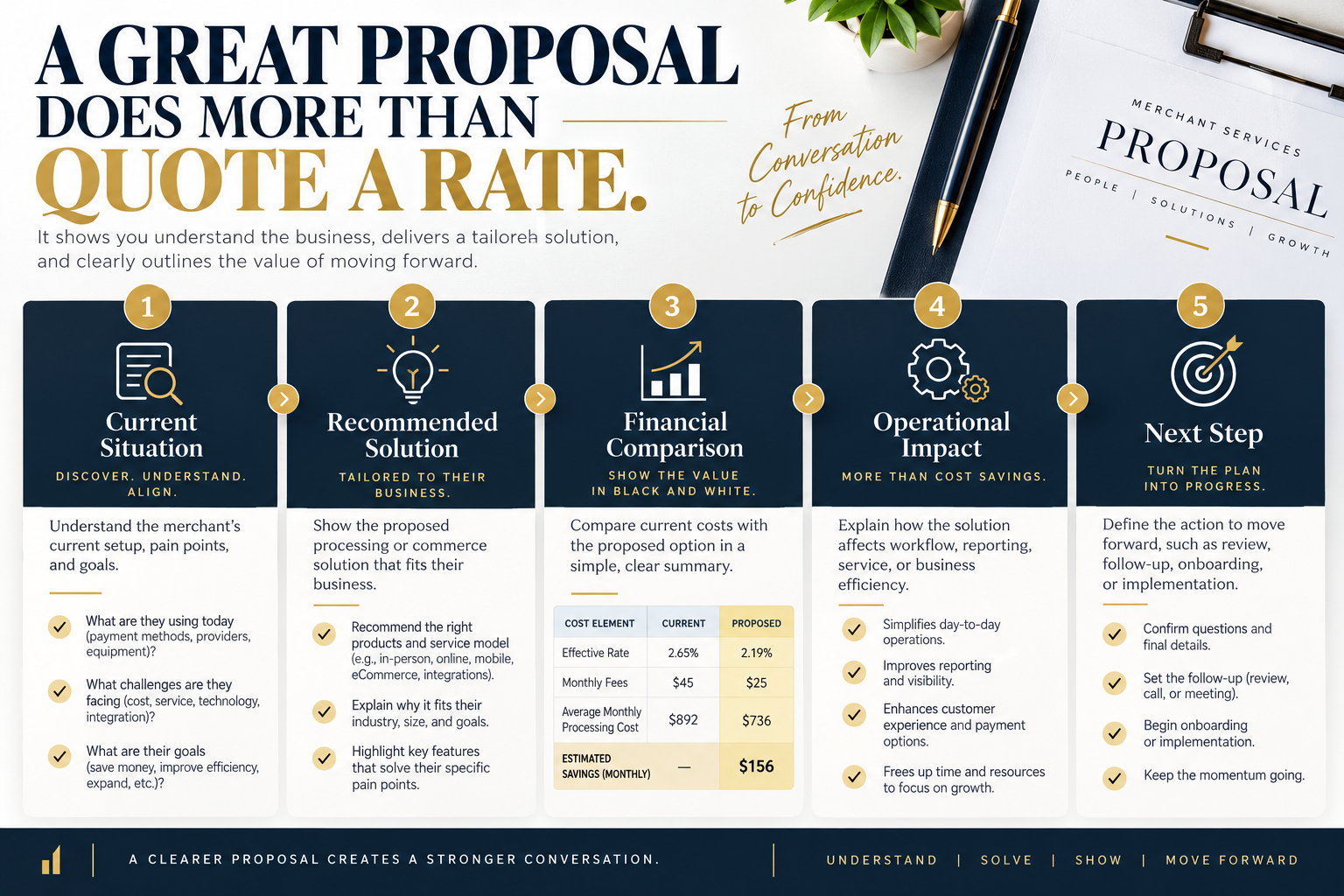
How to Build a Merchant Services Proposal That Makes Sense
I believe a strong proposal should be easy for a business owner to understand.
You don't need to overwhelm the merchant with industry terminology.
You need to clearly explain the recommendation.
Here are five areas I recommend addressing.
1. The Merchant's Current Situation
Summarize what the business is using today and the specific issue or opportunity you've identified.
Keep it factual.
2. Your Recommended Solution
Explain what you're proposing and why it fits the merchant's needs.
That could involve payment processing, pricing, equipment, POS technology, or a combination of solutions.
3. The Financial Comparison
When appropriate, provide a clear comparison of current and proposed costs.
Use the merchant's actual available information and clearly state any assumptions.
Avoid guaranteeing savings based on incomplete data or uncertain future processing activity.
4. The Operational Impact
Explain what changing providers or systems would involve.
Will equipment need to be installed?
Will employees require training?
Will existing software need to be replaced?
Are there implementation fees or contractual obligations?
These questions can matter just as much as the pricing.
5. The Next Step
A proposal should lead to a clear decision-making process.
What does the merchant need to review?
Who else needs to be involved?
Would a demonstration help?
What information is still missing?
And when will you reconnect?
If the proposal doesn't create a clear next step, the opportunity can easily stall.
Don't Just Email the Proposal and Hope
This might be one of the most important lessons in the entire article.
Sending a proposal is not the same as presenting a proposal.
I can't tell you how many times I've watched agents do the hard work of finding a prospect, getting the statement, and preparing a recommendation, only to lose momentum at the final step.
They email the proposal.
Then they wait.
A few days later, they send a message:
"Just checking in."
Then another:
"Did you get a chance to look at it?"
And eventually the prospect stops responding.
Now, sometimes a merchant simply isn't interested.
But other times the agent never created a meaningful opportunity to discuss the recommendation.
Schedule the Review Before You Send It
Whenever practical, I encourage agents to establish a time to review the proposal with the decision-maker.
You might say:
"I'll put together a comparison based on what we've discussed. Would Tuesday morning or Wednesday afternoon work better for us to review it together?"
That approach gives the conversation a purpose.
It also helps the merchant understand that you're offering to explain the recommendation, not simply sending a price sheet.
Present the Value, Not Just the Savings
During the review, explain what you found.
Show the relevant costs.
Discuss the recommended solution.
Answer questions.
And help the merchant understand how the proposal addresses their business needs.
Don't assume the merchant understands interchange, pricing models, software fees, or implementation requirements.
Part of your value as an agent is helping them make sense of those details.
Ask for the Business When It Makes Sense
Some agents do a great presentation and then never ask the merchant whether they want to move forward.
They keep explaining.
They keep adding information.
They keep talking.
But eventually you need to determine whether the merchant is ready to make a decision.
If you've addressed their questions and the solution makes sense, it's appropriate to ask whether they're comfortable moving forward.
If they aren't ready, find out what remains unresolved.
A professional close should create clarity, not pressure.
Follow-Up Is Part of the Proposal Process
A proposal doesn't automatically become a lost opportunity because the merchant doesn't sign immediately.
Business owners have competing priorities.
They may need to consult a partner.
They may want to compare options.
They may need to wait for a contract to expire.
Or they may have legitimate concerns that need to be addressed.
That's why follow-up matters.
But effective follow-up isn't simply contacting the merchant repeatedly.
It's continuing the decision-making conversation.
Every Proposal Needs a Next Action
After presenting a proposal, record:
The merchant's reaction
Questions or objections raised
Other decision-makers involved
Information you promised to provide
Any remaining concerns
The agreed follow-up date
The specific purpose of the next conversation
This information helps you follow through professionally.
It also prevents you from restarting the conversation every time you contact the merchant.
If you're struggling to manage these details, read my guide to organizing merchant services leads, follow-ups, and deals.
Your pipeline should tell you exactly which proposals need attention.
What Six Proposals Per Week Looks Like Over 90 Days
Let's look at the math.
If you consistently complete six qualified proposals per week, here's what that activity produces over approximately 13 weeks.
Time Period | Qualified Proposals |
|---|---|
1 week | 6 |
4 weeks | 24 |
8 weeks | 48 |
13 weeks | 78 |
That's 78 proposals in approximately 90 days.
Now, I want to be careful with how you interpret that number.
Seventy-eight proposals don't guarantee a specific number of signed deals.
Not every proposal will be equally qualified.
Some merchants may take longer to decide.
Others may choose not to move forward.
And some proposals may involve much larger or more complex opportunities than others.
But 78 legitimate proposals represent a substantial amount of sales activity.
Compare that with an agent who presents one proposal every two weeks.
Over 13 weeks, that agent might complete only six or seven proposals.
That's a major difference in the number of opportunities being actively developed.
Why Consistency Is More Important Than One Great Week
I've seen agents get excited after a week where they complete several proposals.
But then they stop prospecting.
Their pipeline slows down.
And suddenly they have nobody new to present to.
This is why the three activities in my Merchant Sales Production Formula work together.
Prospecting creates opportunities.
Proposals help develop them.
POS demonstrations create another way to help merchants evaluate solutions.
You need a consistent flow of activity rather than occasional bursts of production.
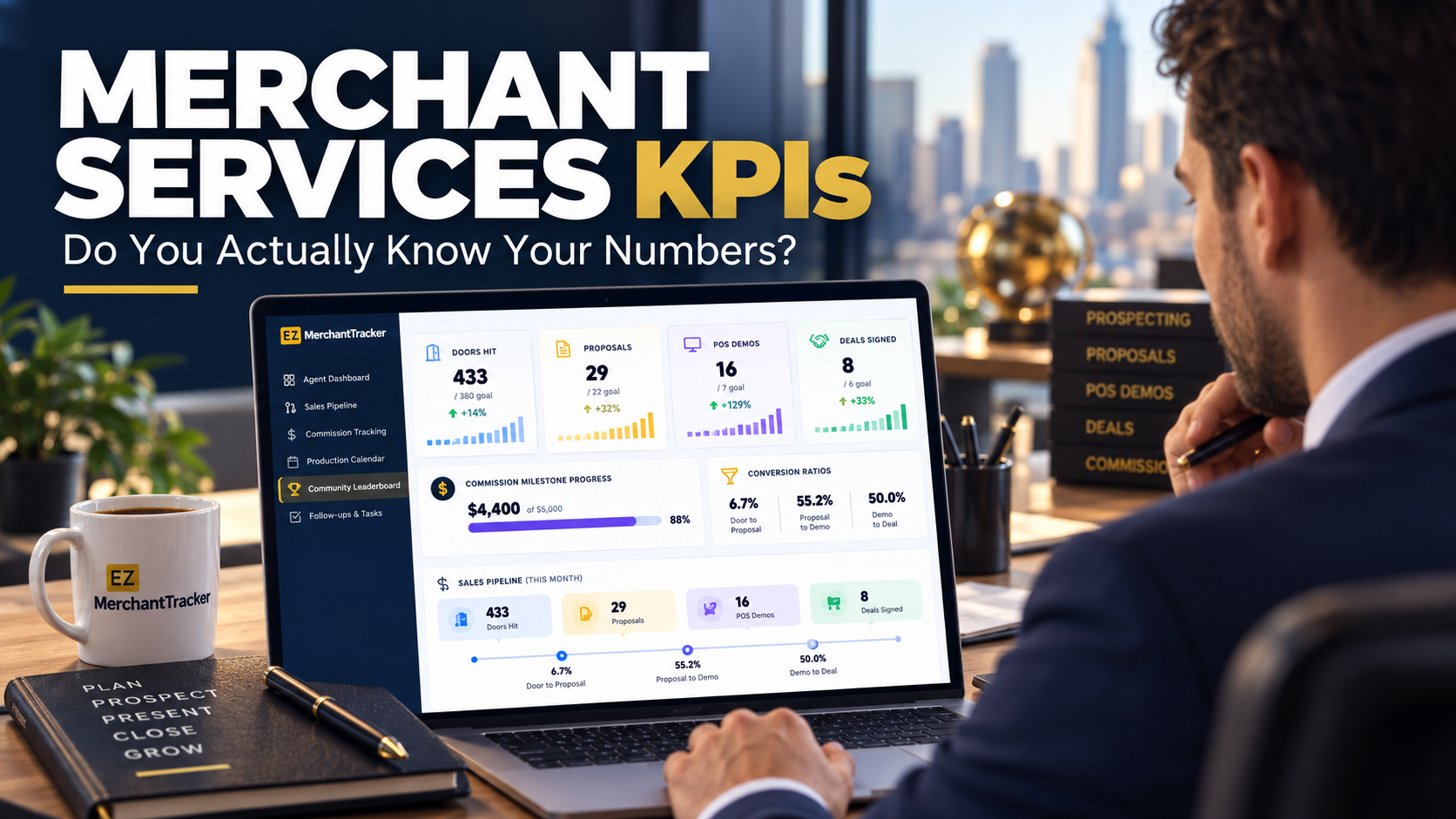
Measure Your Proposal-to-Signed-Deal Conversion Rate
One of the most useful sales performance measurements is your proposal-to-signed-deal conversion rate.
It helps you understand how effectively proposals are translating into signed business.
For example, imagine two agents each complete 24 proposals over a period of time.
Agent A signs six deals.
Agent B signs three.
Their results would look like this:
Measurement | Agent A | Agent B |
|---|---|---|
Proposals | 24 | 24 |
Signed deals | 6 | 3 |
Proposal-to-deal ratio | 25% | 12.5% |
These are hypothetical examples, not industry benchmarks.
But they illustrate why measuring results matters.
Both agents completed the same number of proposals.
Yet their signed-deal outcomes were different.
Why?
There could be several reasons.
Maybe Agent A is better at qualifying prospects.
Maybe Agent B is working more complicated opportunities.
Maybe one agent presents proposals in person while the other emails them.
Maybe follow-up is the difference.
Or maybe the sales cycles are simply different.
The ratio doesn't tell you the entire story.
But it gives you a place to start asking questions.
Don't Judge Your Conversion Rate Too Quickly
Merchant-services opportunities don't always close in the same week a proposal is presented.
Some take days.
Others take weeks or longer.
That means a short-term conversion ratio can be misleading.
Look at trends over time.
Review the actual opportunities.
And consider the timing and quality of your pipeline.
If you want to understand the other important measurements, read my article on merchant services KPIs and sales performance.
Common Mistakes That Hurt Merchant Services Proposals
Here are some of the biggest mistakes I want agents to avoid.
1. Preparing Proposals for Unqualified Prospects
Don't spend hours preparing detailed recommendations for businesses that haven't shown a legitimate reason to evaluate your solution.
Qualify the opportunity first.
2. Competing Entirely on Price
Price matters, but it's not the only reason merchants change providers.
Service, reliability, technology, support, and operational value can all influence the decision.
3. Making Savings Claims Without Accurate Information
Don't promise savings you can't support.
Understand the merchant's current costs, proposed pricing, and relevant assumptions.
4. Sending Proposals Without Scheduling a Review
Whenever practical, create an opportunity to explain the recommendation and answer questions.
5. Failing to Involve Decision-Makers
A proposal can stall when the person reviewing it isn't authorized to make the decision.
Identify the appropriate people early.
6. Forgetting to Follow Up
A proposal that sits in someone's inbox without a next step is difficult to manage.
7. Counting Every Quote as a Qualified Proposal
Your activity tracking should reflect meaningful sales opportunities, not inflated numbers.
8. Stopping Prospecting Once You Have Proposals Outstanding
Don't let a handful of active proposals become an excuse to stop generating new business.
IMAGE CUE — PROPOSAL VS. PRESENTATION
Placement: After the common mistakes section.
Visual: A split-panel educational graphic. Left panel shows an unanswered proposal email sitting in an inbox, labeled "Sent and Forgotten." Right panel shows an agent reviewing a proposal with a business owner, labeled "Presented and Discussed." Professional, understated business styling.
Overlay: DON'T JUST SEND THE PROPOSAL. PRESENT THE SOLUTION.
ALT: Comparison of emailing a merchant services proposal without follow-up versus presenting and reviewing a payment processing solution with a business owner.
How Proposals Fit Into the Results Pyramid
One of the frameworks I've taught agents for years is my Results Pyramid.
It follows this progression:
Contacts → Owners → Full Pitches → Targets → Closes → Activations
The principle is that successful sales outcomes depend on the activities that happen earlier in the process.
You need contacts to create owner conversations.
You need meaningful conversations to identify opportunities.
You need to present solutions to help merchants make decisions.
And you need signed deals to progress toward activation.
Proposals are an important part of that process.
They help move qualified opportunities from interest toward a decision.
But they aren't the final outcome.
A signed deal still needs to move through approval and activation.
And actual residual compensation depends on processing activity and the terms of your agreement.
Watch My Results Pyramid Training
If you haven't watched this training yet, I recommend it.
It explains why productive activity and a consistent sales process matter more than simply hoping to close deals.
Why I Track Proposals Inside EZ MerchantTracker
Proposals are one of the three production activities I built into EZ MerchantTracker because I believe agents need a clear picture of whether they're developing real sales opportunities.
Along with prospecting and POS demonstrations, agents can track proposals, review their activity against recommended weekly benchmarks, and examine how proposals relate to signed deals.
But I want to emphasize something.
The software doesn't make you a better salesperson simply because you're using it.
You still have to understand the merchant.
You still have to prepare a meaningful recommendation.
You still have to present the value.
And you still have to follow up.
I built EZ MerchantTracker to help agents stay organized and understand their production.
If you're looking for a merchant-services CRM that helps you manage leads, proposals, follow-ups, and performance, you can explore it with a 14-day free trial.
You can also watch my full EZ MerchantTracker demonstration.
The tool helps you track the work.
Your execution is what creates the opportunity.
My Advice to New Merchant Services Agents
If you're new to this industry, don't worry about creating the most impressive proposal document in the world.
Start by learning how to understand a merchant's needs.
Learn how processing statements work.
Understand the products you're representing.
Practice explaining costs and value in simple language.
And get comfortable asking business owners to review a recommendation.
You don't need a 30-page presentation to help a merchant make a decision.
You need a relevant solution, accurate information, and a professional conversation.
I also recommend getting properly educated before making claims about processing rates, equipment, or merchant agreements.
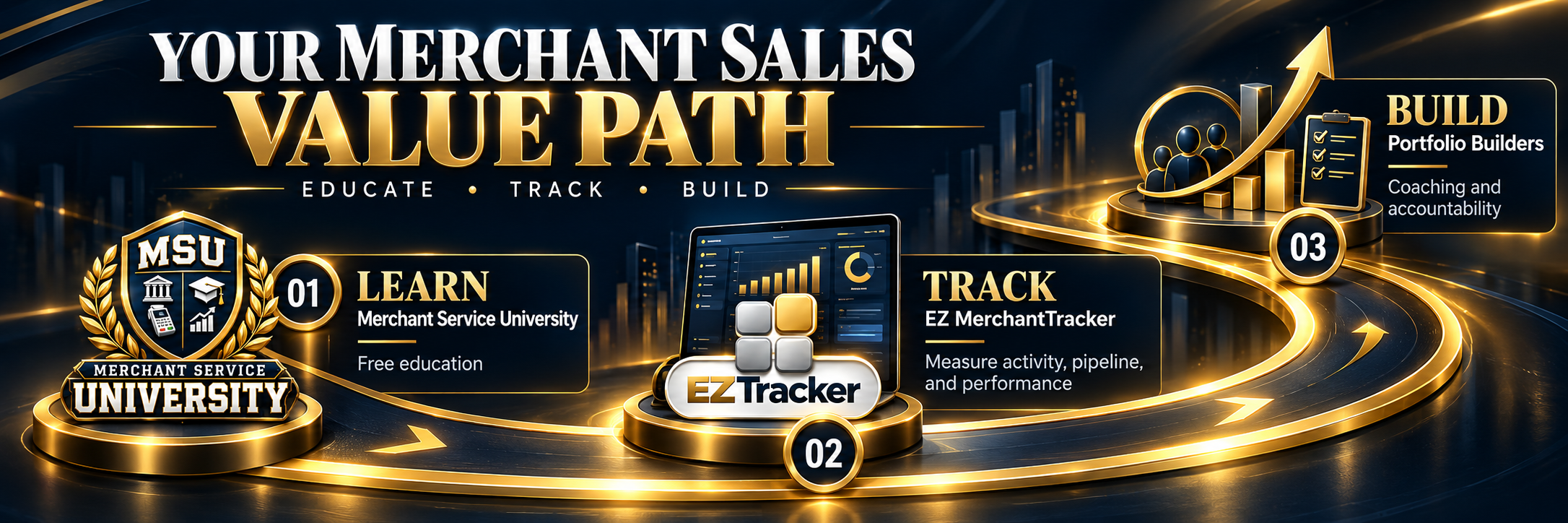
That's why I created Merchant Service University, where agents can learn the fundamentals of merchant services and modern commerce solutions.
The more you understand what you're selling, the more confidently you can present recommendations that actually make sense for business owners.
Final Thought: Stop Collecting Opportunities and Start Developing Them
Here's what I want you to remember.
A business card isn't a deal.
A processing statement isn't a deal.
An interested merchant isn't a deal.
And a proposal sitting in someone's inbox isn't a deal.
Those things can represent opportunities.
But opportunities require action.
You need to identify the merchant's needs.
You need to prepare the right solution.
You need to explain the value.
You need to answer questions.
And you need to follow through.
That's why I recommend six qualified proposals per week.
Not because six is some magical number that guarantees success.
But because it creates a measurable standard for consistently developing sales opportunities.
Prospecting fills your pipeline. Proposals move qualified opportunities toward decisions. And consistent execution gives you more chances to sign deals and build your merchant portfolio.
That's the second part of the Merchant Sales Production Formula.
And it's a skill every serious merchant-services agent should develop.
Continue Learning: The Merchant Sales Production Formula
This is article three of my four-part series on the activities that build a healthy merchant-services sales pipeline.
Start with the cornerstone article:
The Merchant Sales Production Formula: 3 Activities That Build a Healthy Pipeline
Part 2: Prospecting
Merchant Services Prospecting: Why Your Pipeline Dies When You Stop Finding New Business
Next in the series:
POS Demos in Merchant Services: Why Showing Business Owners the Technology Creates Opportunities
Planned URL: https://iamjoewagner.com/post/merchant-services-pos-demos
For additional training, explore:
Merchant Services Sales Pipeline: How to Organize Leads, Follow-Ups, and Deals
Merchant Services KPIs: The Sales Numbers Every Agent Should Track
Frequently Asked Questions About Merchant Services Proposals
What is a merchant services proposal?
A merchant services proposal is a recommendation presented to a business owner outlining a payment-processing or commerce solution. It may include pricing, cost comparisons, equipment, software, service considerations, and implementation details.
How many proposals should a merchant services agent present per week?
I recommend a minimum benchmark of six qualified proposals per week. This is a practical production target I teach agents, not an industry-wide standard or a guaranteed formula for closing deals.
What should a merchant services proposal include?
A strong proposal should explain the merchant's current situation, the recommended solution, relevant pricing or cost comparisons, operational considerations, and the next steps required to move forward.
Should I email a merchant services proposal or present it in person?
Whenever practical, I recommend reviewing the proposal directly with the decision-maker, whether in person or through a virtual meeting. Email can be useful for sharing the document, but a conversation allows you to explain the recommendation and answer questions.
Do I need a processing statement to prepare a proposal?
A processing statement is often important when preparing an accurate cost comparison. However, the information required depends on the type of solution you're proposing. POS and technology opportunities may require additional information about software, equipment, and business operations.
How do I improve my merchant services proposal conversion rate?
Focus on qualifying prospects, understanding their needs, preparing relevant recommendations, presenting proposals clearly, involving decision-makers, and establishing meaningful follow-up steps. Track your results over time to identify areas for improvement.
What's the difference between a proposal and a POS demonstration?
A proposal outlines a recommended solution and its business or financial considerations. A POS demonstration allows the merchant to see and evaluate the technology. Some opportunities require one, while others benefit from both.
Does presenting six proposals per week guarantee merchant accounts?
No. The benchmark measures productive sales activity. Actual results depend on merchant needs, qualification, competition, pricing, presentation quality, follow-up, and other factors.
Why should I track merchant services proposals?
Tracking proposals helps you understand whether prospecting is developing into meaningful sales opportunities. It also allows you to evaluate proposal-to-signed-deal conversion trends and identify potential weaknesses in your sales process.
Can EZ MerchantTracker help track proposals?
Yes. EZ MerchantTracker includes proposal activity tracking, pipeline management, follow-up organization, and sales performance measurements designed for merchant-services agents. You can start a 14-day free trial.